


Icom F62D UL UHF Intrinsically Safe Radio
ر.س3,362.60
Available on backorder




Icom Radio
Icom F62D UL UHF Intrinsically Safe Radio
ICOM F62D UL Specifications
Device Name:
ICOM F62D UL
Certification: Explosion-Proof Handheld Two-Way Radio (ATEX)
Technical Specifications:
Supported Frequencies:
UHF: 400-470 MHz
Output Power:
5 Watts
Communication System:
NXDN (Digital)
DMR (Digital)
FM (Analog)
Protection Level: (According to ATEX Standards)
ATEX Zone 1 Standard, for protection against flammable gases and vapors
Explosion-Proof Class II 2G Ex ib IIC T4 Gb
Water Resistance:
IP68 (resistance to immersion to a depth of 1 meter for 30 minutes)
Battery:
BP-277UL: 1800 mAh Lithium-Ion Battery Ampere, provides up to 17.5 hours of runtime (in digital mode).
Durability:
Compliant with MIL-STD-810 military shock tests.
Display:
High-resolution backlit LCD display
Additional Features:
Emergency Button
Man Down: Alerts users if they fall
GPS Tracking and Location (Optional)
Noise Reduction for Improved Sound Quality in Noisy Environments
1W Speaker
Dimensions: 95 x 56 x 36.4 mm
Weight: 310 g (including battery and antenna)
Certifications:
UL (Underwriters Laboratories) Certified
Also IECEx, ATEX Certified
Icom F62D UL Radio Uses:
Oil and Gas Industry:
Used at drilling sites, refineries, and offshore platforms to ensure safety in hazardous environments.
Chemical Plants:
Essential for communication between employees working in areas containing flammable gases and chemicals, enabling clear and reliable communication.
Pharmaceutical Industries:
Facilitates communication between underground and surface workers, enhancing safety and coordination.
Construction Sites:
Ideal for teams working on construction sites with explosion hazards, ensuring effective communication between team members.
Industrial Facilities:
Used in plants handling flammable gases or combustible materials, enabling safe and efficient operations.
Emergency Services:
Provides reliable communication for firefighters working in hazardous environments such as chemical leaks or fires.
Transportation and Logistics:
Used for transporting and coordinating the movement of hazardous materials, ensuring compliance with safety regulations.
Nuclear Facilities:
Used by nuclear power companies to operate nuclear plants in environments containing explosion hazards, such as gas distribution sites.
Underground tunnels:
Ensure effective communication in environments controlled for flammable hazards.
Search and rescue:
Suitable for search and rescue operations in various industries where communication is vital and hazards exist.
Related products
-
SALE 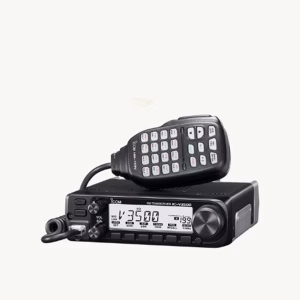
ICOM V3500 VHF Car Radio
ر.س1,035.00Select options This product has multiple variants. The options may be chosen on the product page -
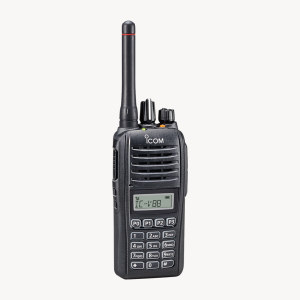
icom v88 pro
ر.س1,466.25 -
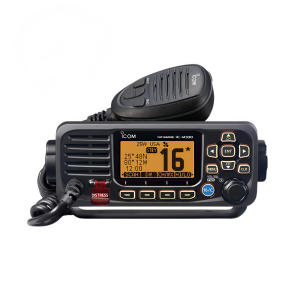
ICOM IC-M330GE VHF Marine Radio
ر.س1,522.60 -
ICOM SP-35 External Speakers
ر.س165.60
Reviews
There are no reviews yet.